How LED Walls Transform Modern Commercial Spaces
Nicky Lim
4 min read
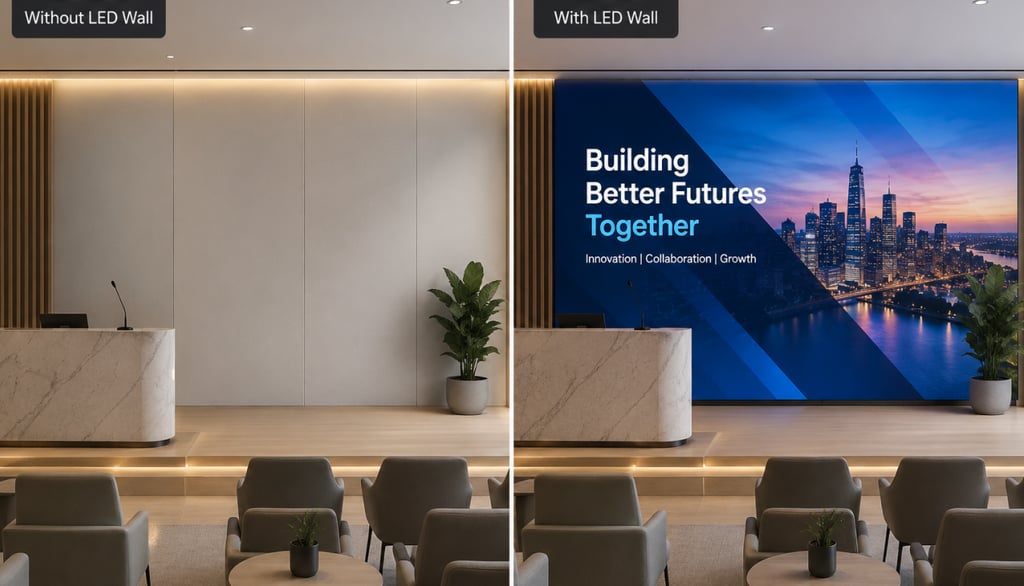
Walk into a modern corporate office, retail showroom, experience centre, or flagship lobby today and you’ll notice something almost immediately. The spaces feel more alive, not because of the furniture, the lighting but because the environment itself is.
That’s the power of LED walls.
For many businesses, LED display systems are no longer just “screens on walls.” They’ve evolved into tools for communication, branding, storytelling, customer engagement, and workplace experience. In some cases, they're also interactive spaces.
Over the past few months working within the digital signage and enterprise AV industry, I’ve seen firsthand how LED walls can completely transform the look, feel, and energy of a commercial space. Today, I'd like to share a bit more of How LED Walls Transform Modern Commercial Spaces.
1. LED Walls Create Presence
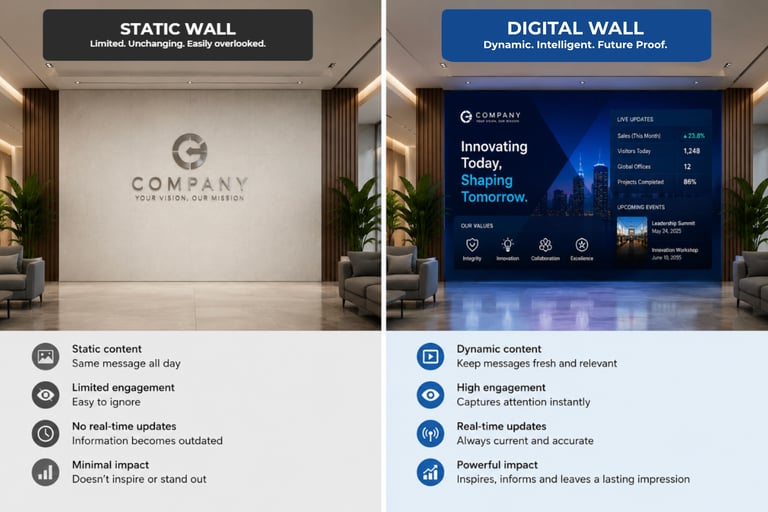
One of the biggest differences between traditional signage and LED walls is presence. A printed backdrop stays static while an LED wall creates movement, atmosphere, and attention.
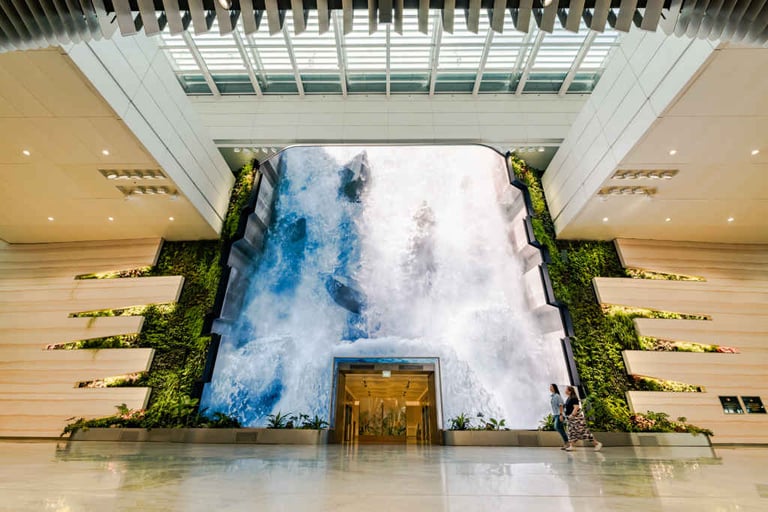
Whether it’s a corporate lobby, retail environment, meeting space, command centre, auditorium or showroom, an LED wall immediately changes how people experience the environment. It gives the space a more modern, premium, and future-ready feel. In many ways, it becomes part of the architecture itself.
The Wonderfall in Singapore, a perfect example of how LED technology can transform architecture into an experience. What was once just a wall becomes movement, atmosphere and presence turning an ordinary space into something people remember.
2. Communication Becomes More Dynamic
Most businesses underestimate how important visual communication has become. People absorb information faster visually than verbally. With LED walls, businesses can: display real-time information, reinforce branding, showcase campaigns, present data dashboards, create immersive presentations and adapt messaging instantly.
Instead of a space remaining static, the environment becomes responsive and adaptable. This is especially powerful in corporate environments, retail spaces, hospitality, education and public venues.
3. Customer Experience Matters More Than Ever
Modern consumers don’t just buy products anymore, they respond to experiences. A well-designed LED environment can capture attention, improve engagement, increase dwell time (the time they spend hanging out in a specific space and strengthen brand perception. Even simple implementations can dramatically improve how a business is perceived.
The psychology itself is actually pretty interesting. When people walk into a visually impressive environment, they naturally associate the brand with innovation, professionalism, and credibility.
4. LED Technology Is Becoming More Accessible
One misconception many businesses still have is LED walls are only for huge corporations.
That’s no longer true. As technology evolves, LED solutions are becoming: more scalable, more customizable and more accessible across different business sizes.
Today, businesses can deploy LED solutions in retail stores, meeting rooms, churches, cafés, property galleries, healthcare facilities, and SME offices without having to bear the heavy cost of owning one thanks to the advancement of technology from manufacturing in China.
Compared to how it was years ago where there was a vast difference in quality between the cheapest and most expensive LED brands in China, the advancement of technology has helped narrow the gap and force manufacturers to improve both quality and pricing. This has lowered the barrier of entry for many businesses.
Of course, not every LED solution is the same. Pixel pitch, viewing distance, brightness, installation method, warranty, processor quality, and after-sales support still matter.
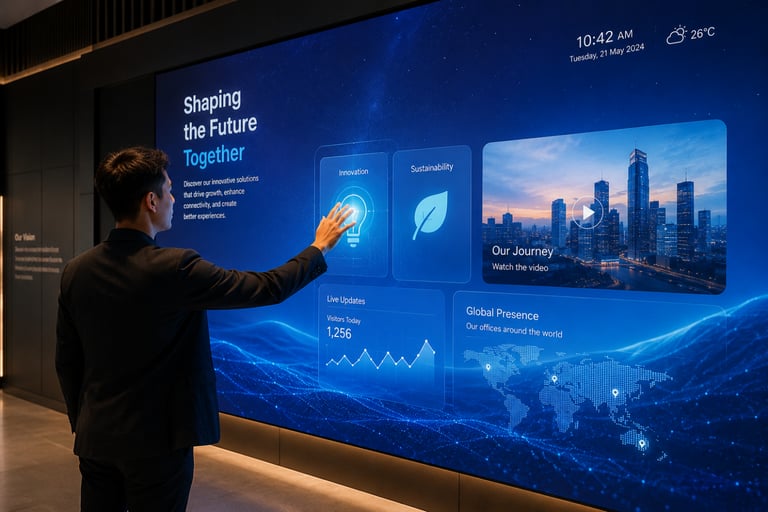
But the key shift is this. LED is no longer reserved only for big brands with massive budgets. It is becoming a practical visual communication tool for businesses that want to look more modern, present information more clearly, and create a stronger impression in their physical spaces.
While market is still early in Malaysia, the growing momentum makes it an exciting space to watch over the next few years.
5. Technology Alone Isn’t Enough
This is probably the biggest lesson I’ve learned in this industry. The best digital signage projects are not driven by technology alone.
They succeed when businesses understand the purpose, the audience, the message and the experience they want to create. A powerful LED wall with poor content or weak strategy is still just an expensive screen.
The real value comes from combining these 4 elements:
Technology
Storytelling
Communication
Customer Experience
That’s where transformation happens.
In short, LED walls are changing the way businesses design and communicate within physical spaces. They are no longer just display tools. Instead, they are becoming part of the customer journey, workplace experience, and brand identity itself.
As businesses continue moving toward more immersive and digitally connected environments, I believe we’ll see LED and workplace technology play an even bigger role in shaping modern commercial spaces in the years ahead.
Thank you for reading my post today. I sincerely hope it gave you a better understanding of how LED technology is transforming modern commercial spaces and the way businesses communicate, engage, and create experiences.